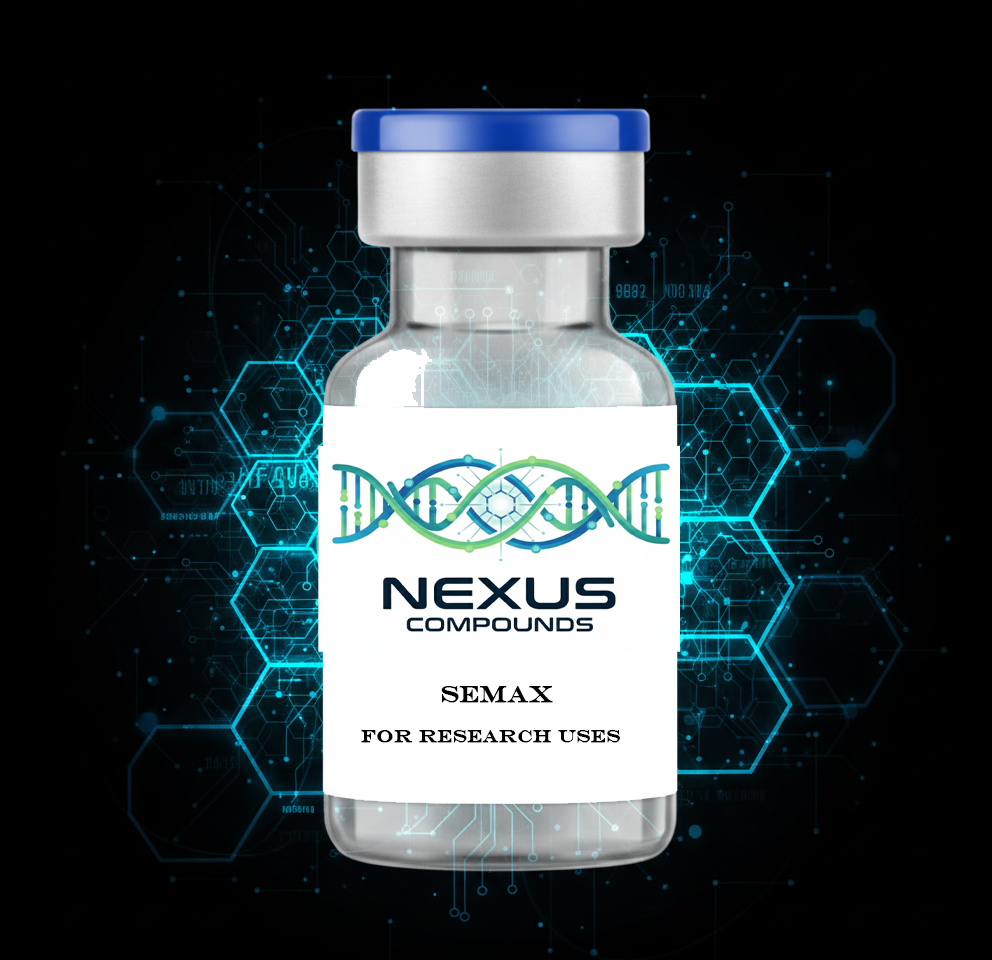
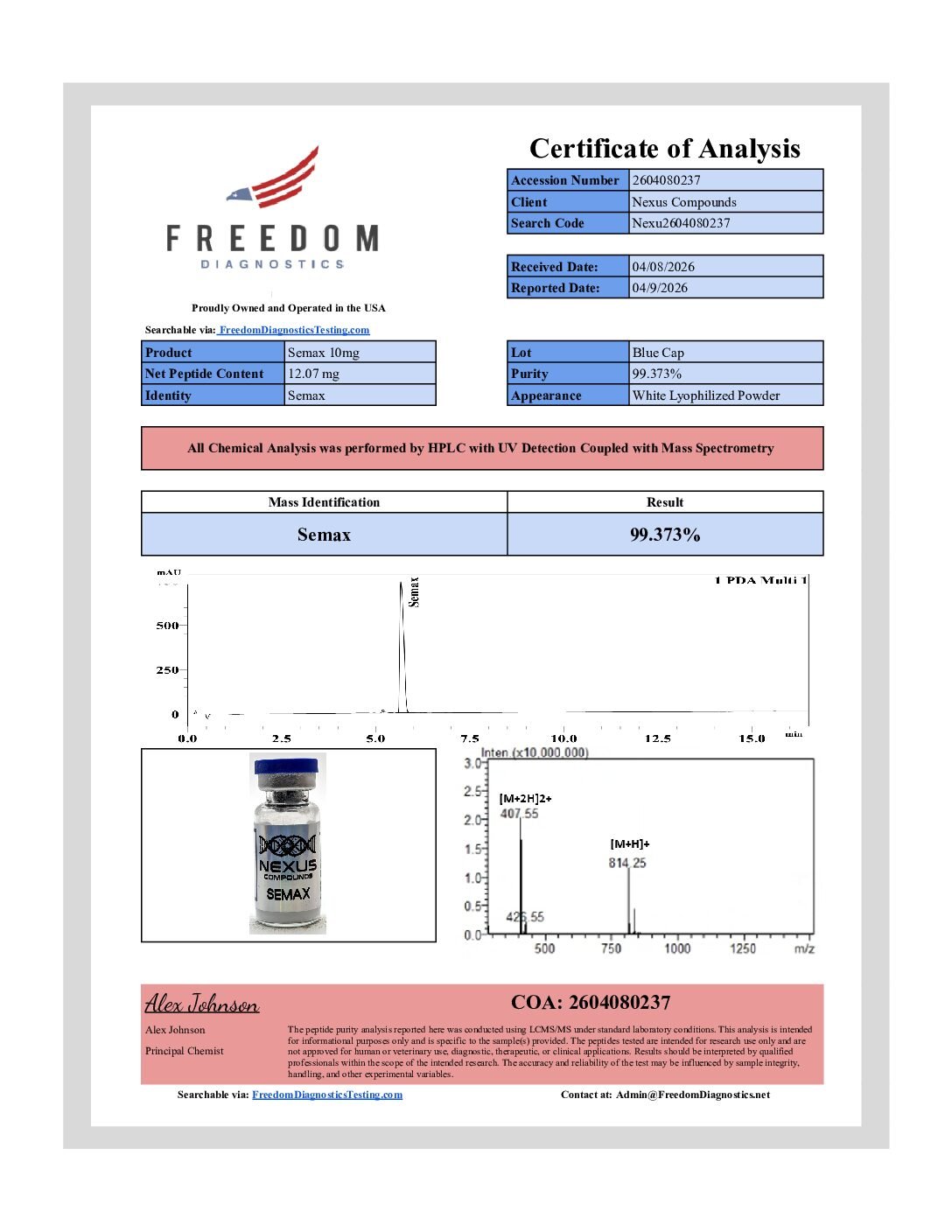
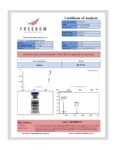
Semax 10 Mg
$50.00
Description: Semax is a synthetic heptapeptide ($Met$–$Glu$–$His$–$Phe$–$Pro$–$Gly$–$Pro$) derived from the $ACTH(4-10)$ fragment. This high-purity reagent is intended for in-vitro research into neurotrophic signaling, specifically investigating the expression of BDNF and the modulation of melanocortin receptors in cellular models.
Semax – Research Use Only
Description
Semax is a synthetic heptapeptide ($Met$–$Glu$–$His$–$Phe$–$Pro$–$Gly$–$Pro$) derived from the N-terminal fragment of the adrenocorticotropic hormone (ACTH). This compound is provided as a high-purity chemical reagent intended for in-vitro laboratory research into neuroprotection, cognitive enhancement models, and neurite outgrowth.
Research applications focus on the study of BDNF (Brain-Derived Neurotrophic Factor) expression, the modulation of the melanocortin system, and the influence of peptide analogs on neurotransmitter metabolic cycles in various cellular environments.
Technical Specifications
Sequence: $Met$–$Glu$–$His$–$Phe$–$Pro$–$Gly$–$Pro$
Molecular Formula: $C_{37}H_{51}N_{9}O_{10}S$
Purity: >98% (HPLC)
Format: Lyophilized powder
Research Use Only – Legal Disclaimer
This product is sold strictly for in vitro laboratory research and educational purposes only. It is not for human or animal use, including use in dogs, pets, or livestock, and must not be used for diagnostic, therapeutic, medical, veterinary, or household purposes.
This compound has not been evaluated or approved by the U.S. Food and Drug Administration (FDA) and is not intended to diagnose, treat, cure, or prevent any disease.
By purchasing from [Nexus Compounds], the purchaser represents and warrants that they are a qualified professional acquiring this product solely for lawful research purposes. The purchaser assumes all responsibility for proper handling, storage, and use, and for compliance with all applicable federal, state, and local laws. [Nexus Compounds] disclaims all liability for misuse, improper application, or unauthorized use of this product.
Key Research Areas for Semax
If you are building out a catalog, researchers often look for these specific mechanisms:
Neuroplasticity: Investigating the upregulation of BDNF and TrkB signaling.
Ischemic Stress: Modeling cellular responses to hypoxia and glucose deprivation.
Enzymatic Stability: Studying the increased half-life of the $Pro$–$Gly$–$Pro$ C-terminus compared to endogenous ACTH fragments.